Throughout history, humanity has fought enemies it could not see. Bacteria, viruses, and microscopic pathogens have shaped civilizations, caused pandemics, and challenged healthcare systems worldwide. In the modern era, technology has joined this battle in new and innovative ways. Among the most significant developments are disinfection and ultraviolet (UV) robots—autonomous machines that use concentrated UV-C light to eliminate harmful microorganisms in hospitals, airports, schools, and public spaces. These robots represent a powerful fusion of robotics, microbiology, and public health engineering.
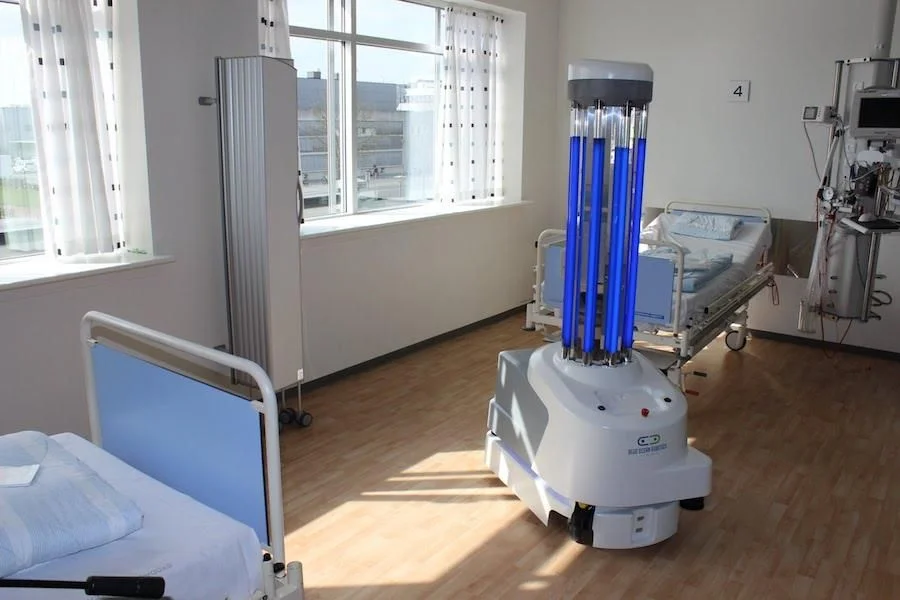
Disinfection robots are designed to sanitize environments without direct human contact. Many operate autonomously, navigating rooms using sensors and mapping technology. Their most critical feature is the emission of ultraviolet-C (UV-C) light, a specific wavelength of ultraviolet radiation capable of destroying bacteria, viruses, and fungi. UV-C light disrupts the DNA and RNA of microorganisms, preventing them from replicating and effectively neutralizing them. Unlike chemical disinfectants, UV-based systems leave no residue and require no manual application.
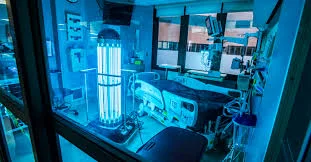
The importance of UV disinfection robots became especially evident during global health crises such as the COVID-19 pandemic. Hospitals and medical facilities faced overwhelming pressure to maintain sterile environments while minimizing staff exposure to infectious agents. UV robots provided a solution: they could enter contaminated rooms after patient discharge, emit high-intensity UV-C light for a programmed duration, and significantly reduce microbial presence. This reduced reliance on chemical disinfectants and limited healthcare workers’ exposure to pathogens.
Technologically, UV disinfection robots combine several advanced systems. They rely on sensors such as LiDAR and infrared detectors to map environments and avoid obstacles. Their control systems ensure uniform light distribution, calculating exposure time and distance to maximize effectiveness. Some models are remotely operated, while others function fully autonomously, returning to charging stations when tasks are complete. Safety mechanisms are essential, as UV-C radiation can harm human skin and eyes; therefore, these robots automatically shut off if motion is detected in the room.
Beyond healthcare, disinfection robots have expanded into transportation hubs, hotels, educational institutions, and corporate offices. Airports use them to sanitize waiting areas. Schools deploy them in classrooms after hours. This shift reflects a broader societal awareness of hygiene and infection control. In a world increasingly concerned with public health, UV robots serve as proactive tools rather than reactive responses.
However, these technologies are not without limitations. UV light only disinfects surfaces directly exposed to radiation; shadowed areas may require repositioning or additional cycles. Furthermore, UV disinfection supplements but does not entirely replace traditional cleaning practices. Manual removal of dirt and organic matter remains necessary before UV treatment. Cost considerations and proper training also affect widespread adoption.
Despite these challenges, disinfection and UV robots symbolize a transformative approach to hygiene. They represent the movement toward automation in infection control—where precision, consistency, and reduced human exposure become central priorities. Their use demonstrates how robotics can extend beyond manufacturing and labor into the domain of public health and safety.