Technological revolutions often begin quietly, inside laboratories rather than on factory floors. Neuralink is one such development—an ambitious effort to connect the human brain directly to computers through implantable brain–computer interface (BCI) technology. Founded in 2016 by Elon Musk and a team of neuroscientists and engineers under Neuralink, the company seeks to build a digital bridge between neural activity and external devices. Its work represents one of the boldest attempts to merge biology and computing in modern medical science.
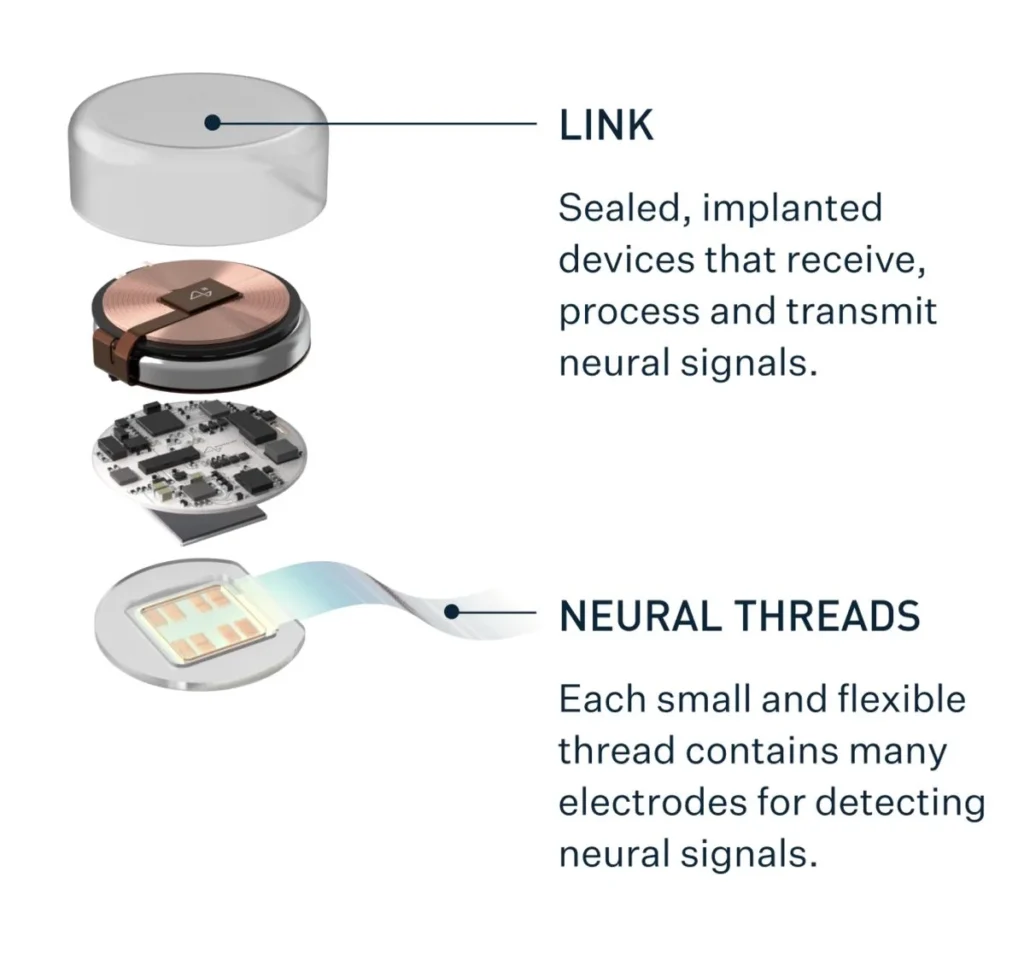
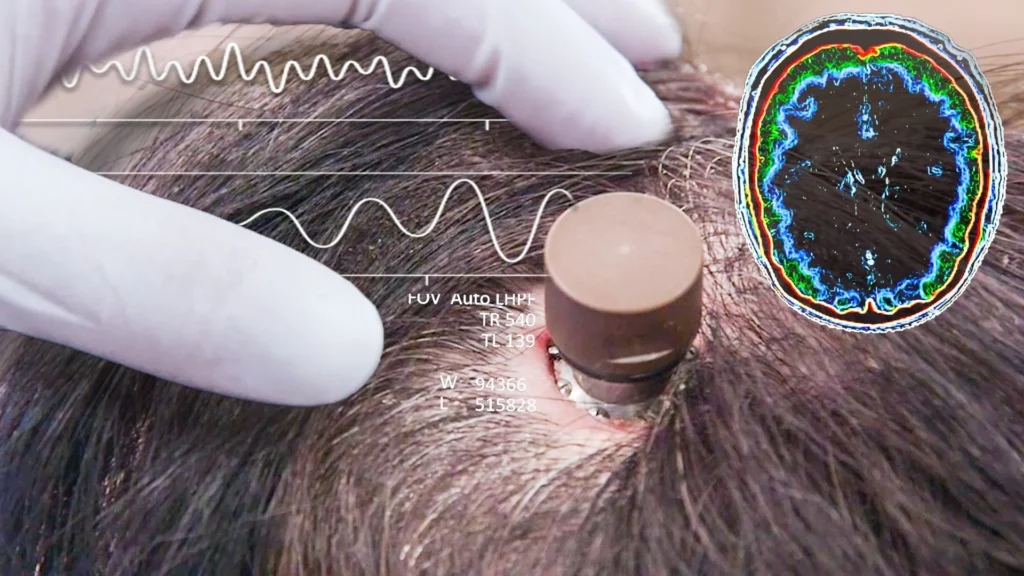
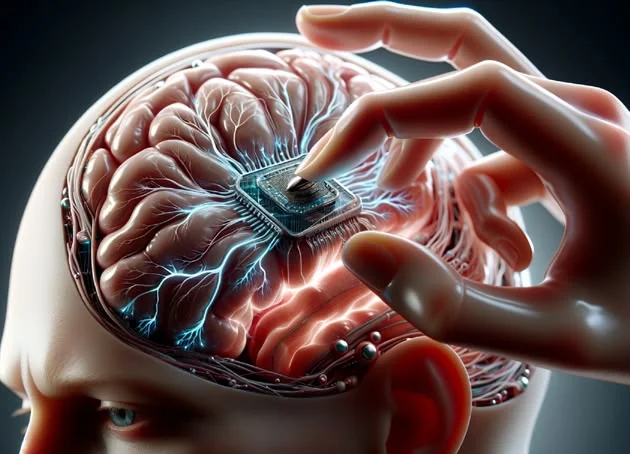
At its core, Neuralink develops a small implant placed inside the skull. From this device extend ultra-thin electrode threads—finer than a human hair—that are inserted into specific regions of the brain. These electrodes detect electrical signals produced by neurons, the brain’s communication cells. The implant then processes and transmits these signals wirelessly to a computer or other device. In simple terms, Neuralink translates thought into digital action.
The immediate purpose of Neuralink is medical, not futuristic enhancement. Millions of people worldwide live with paralysis caused by spinal cord injuries, strokes, or neurodegenerative diseases. In such cases, the brain may still generate movement signals, but damaged neural pathways prevent those signals from reaching the muscles. Neuralink’s technology aims to bypass those broken pathways. Early human trials have demonstrated that individuals with severe paralysis can control a computer cursor or type using thought alone. While this does not yet restore natural walking, it offers renewed independence in communication and digital interaction—an extraordinary step forward for assistive medicine.
Technologically, Neuralink builds upon decades of BCI research. Earlier systems such as academic neural implants required bulky external hardware and wired connections. Neuralink attempts to miniaturize and integrate the system into a fully implantable, wireless device. The surgical robot developed by the company is designed to insert electrodes with high precision, reducing damage to surrounding brain tissue. This combination of microscale hardware, software decoding algorithms, and surgical automation represents a convergence of neuroscience, robotics, and artificial intelligence.
However, Neuralink is not without controversy. Implanting devices into the human brain raises significant ethical and safety concerns. Long-term effects of neural implants remain under study. Questions surrounding data privacy are particularly sensitive: if brain signals can be recorded and interpreted, who controls that information? Additionally, while Neuralink’s stated goal focuses on treating neurological disorders, its broader vision includes the possibility of cognitive enhancement and deeper human–machine integration. Such prospects challenge society’s understanding of identity, autonomy, and equality.
Scientifically, the technology remains in early stages. Neuralink has shown promise in enabling digital control and communication, but full restoration of complex motor functions—such as independent walking—requires additional breakthroughs, particularly in spinal cord repair or brain–spine interfaces. Nevertheless, even limited success represents profound progress. For individuals unable to speak or move, the ability to communicate through thought alone can transform quality of life.
Neuralink also symbolizes a broader philosophical shift. For centuries, the human brain has been viewed as an isolated biological organ, separate from machines. Neuralink challenges that separation. By converting neural signals into code, it suggests that thought itself can interact directly with technology. Whether this integration remains purely therapeutic or evolves into augmentation will depend on future research, regulation, and ethical oversight.