In the world of industrial automation, not all robots are built for strength alone. Some are designed for speed, accuracy, and efficiency in highly controlled environments. Among these, the SCARA robot stands out as a symbol of specialized engineering. Compact, fast, and remarkably precise, SCARA robots have quietly transformed electronics manufacturing, consumer goods production, and modern assembly systems.
SCARA stands for Selective Compliance Assembly Robot Arm. The name itself explains its design philosophy. “Selective compliance” means the robot is flexible in one direction while rigid in another. Specifically, SCARA robots are compliant in the horizontal plane (X–Y direction) but rigid in the vertical (Z direction). This unique mechanical structure makes them exceptionally suited for tasks that require delicate insertion and high-speed assembly.
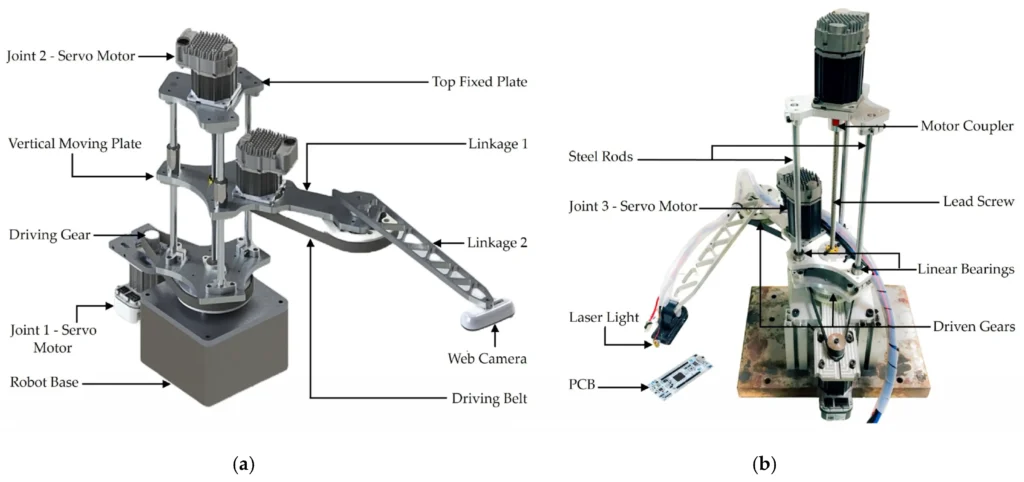
The SCARA robot was developed in the late 1970s, primarily to meet the growing demands of electronics manufacturing. As products became smaller and more complex, industries needed robots capable of handling tiny components with precision and speed. Traditional robotic arms were too large, too slow, or overly flexible for such tasks. Engineers responded by designing a robot with a simpler structure: a base, two parallel rotary joints for horizontal movement, and a vertical linear axis for up-and-down motion.
This configuration allows SCARA robots to move quickly across a flat surface while maintaining excellent vertical stiffness. In practical terms, this means they can pick up small components, align them precisely, and insert them into circuit boards without damaging delicate parts. Their repeatability and precision often reach fractions of a millimeter, which is essential in electronics assembly.
Technologically, SCARA robots combine mechanical simplicity with advanced control systems. Powered by servo motors and controlled by programmable logic systems, they execute rapid, repetitive motions with high consistency. Because of their limited but optimized range of motion, they are easier to program and often more cost-effective than six-axis articulated robots for specific tasks.
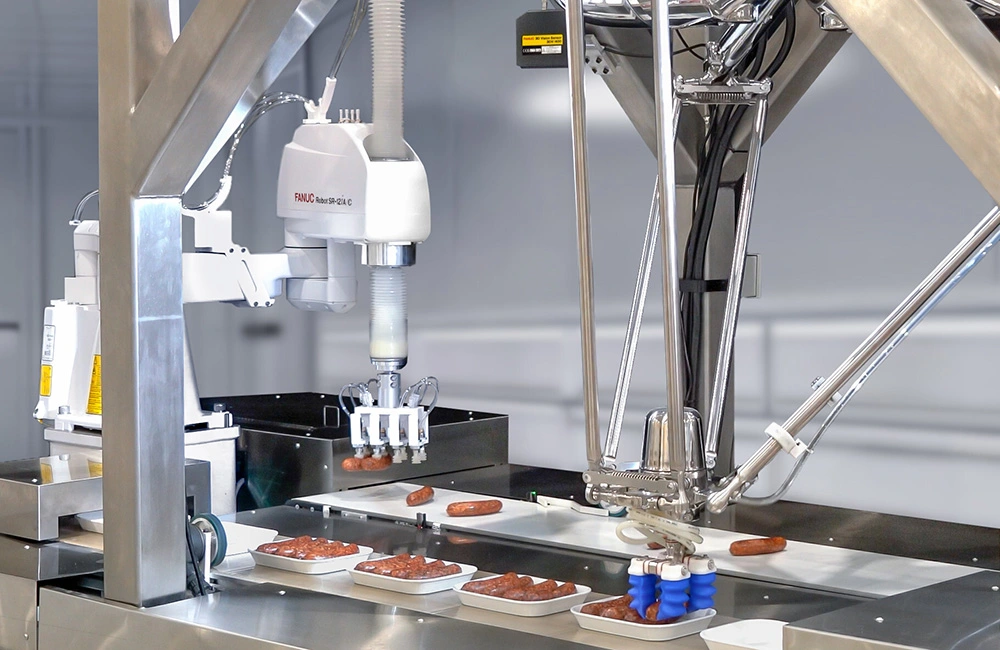
One of the defining characteristics of SCARA robots is speed. In assembly lines, time equals money. A SCARA robot can perform thousands of pick-and-place operations per hour with minimal variation. This efficiency significantly increases production output while maintaining uniform product quality. Industries such as semiconductor manufacturing, pharmaceutical packaging, and small-parts assembly rely heavily on SCARA systems.
However, SCARA robots are not designed for every task. Their strength lies in horizontal assembly operations. They are less suited for complex 3D movements that require full rotational freedom. This limitation is not a weakness but a reflection of their specialization. In robotics, efficiency often comes from designing machines for specific purposes rather than universal capability.
Beyond technical performance, SCARA robots also represent an important stage in the evolution of industrial automation. They demonstrate how robotics shifted from heavy industrial applications to precision manufacturing. As consumer electronics expanded globally, SCARA robots enabled mass production of smaller, more intricate devices at affordable costs.
Like other forms of automation, SCARA robots influence the labor market. By replacing repetitive assembly tasks, they reduce human error and physical strain. At the same time, they require skilled technicians for programming, maintenance, and system integration. This transition reflects a broader industrial transformation—from manual labor toward technical expertise.