Technological revolutions are often associated with computers, artificial intelligence, or space exploration. Yet long before intelligent software entered everyday conversation, a different kind of machine quietly transformed the world’s industries: the articulated robot. Unlike humanoid robots designed to resemble humans, articulated robots do not seek attention. They do not speak, think, or express emotion. Instead, they bend, rotate, lift, weld, and assemble—performing the physical labor that powers modern manufacturing.
An articulated robot is an industrial machine designed with rotary joints that allow it to move similarly to a human arm. Typically built with four to six axes of motion, it consists of a base, shoulder joint, elbow joint, wrist joints, and an end-effector such as a welding torch or gripper. This jointed structure provides flexibility and precision, enabling the robot to reach around obstacles, rotate in complex directions, and perform intricate tasks repeatedly without fatigue.
The origins of articulated robots trace back to 1961, when the first industrial robot, Unimate, was installed in a General Motors factory. This machine marked the beginning of programmable industrial automation. It was not intelligent in the modern sense, but it was revolutionary. For the first time, a programmable mechanical arm could perform dangerous and repetitive tasks on a production line. What began as a bold experiment gradually became the foundation of global manufacturing systems.
Articulated robots were created out of industrial necessity. Manufacturing environments often require operations that are repetitive, hazardous, and physically demanding. Welding car frames, painting vehicle bodies, lifting heavy components, and assembling electronics demand both strength and precision. Human workers can perform these tasks, but prolonged exposure to heat, fumes, noise, and repetitive motion leads to injury and fatigue. Articulated robots were developed to increase safety, improve consistency, and enhance productivity. They do not tire, lose focus, or require breaks. They operate with consistent accuracy, hour after hour.
Technologically, articulated robots combine mechanical engineering, electronics, and computer control systems. Electric or hydraulic actuators power their joints, while controllers execute programmed instructions with remarkable precision. Sensors provide feedback, ensuring accurate positioning and smooth motion. Over time, improvements in processors, servo motors, and control algorithms have transformed these robots into highly sophisticated machines capable of micron-level accuracy.
Today, articulated robots are the backbone of industries such as automotive manufacturing, electronics production, metal fabrication, and heavy machinery assembly. In automotive plants, robotic arms weld thousands of joints per day with exact precision. In electronics factories, they assemble delicate components smaller than a human fingertip. Their versatility allows them to adapt to various tools, from grippers and cutters to spray guns and polishing heads.
However, the rise of articulated robots also introduces important social questions. While they reduce workplace injuries and increase production efficiency, they also reshape labor markets. Jobs that once relied on manual repetition are increasingly automated. This shift demands workforce adaptation, reskilling, and educational reform. The debate surrounding industrial robots is not simply about machines replacing humans; it is about redefining the role of human labor in an automated economy.
Articulated robots represent a paradox of modern technology. They are powerful yet silent, visible in factories but invisible in public discourse. Consumers rarely think about the robotic arms that assemble their cars, smartphones, or appliances. Yet these machines are essential to the affordability and reliability of modern products. Without articulated robots, global supply chains would slow dramatically, costs would rise, and production standards would vary significantly.
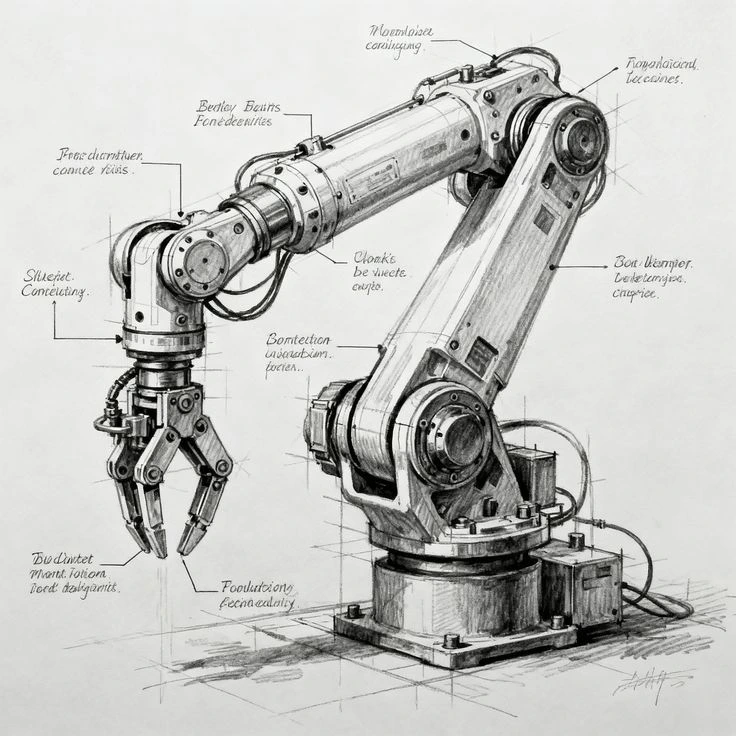
Types of Articulated Robots
- 5-Axis Articulated Robots
- 4-Axis Articulated Robots
- 6-Axis Articulated Robots
- 7-Axis Articulated Robots